Will Pixel Tag give your Android phone arrows, distance estimates or just a chime?
Galaxy phones can get advanced finding too. Older Pixel Pros face a restriction, and attaching a tag to keys adds to the price.
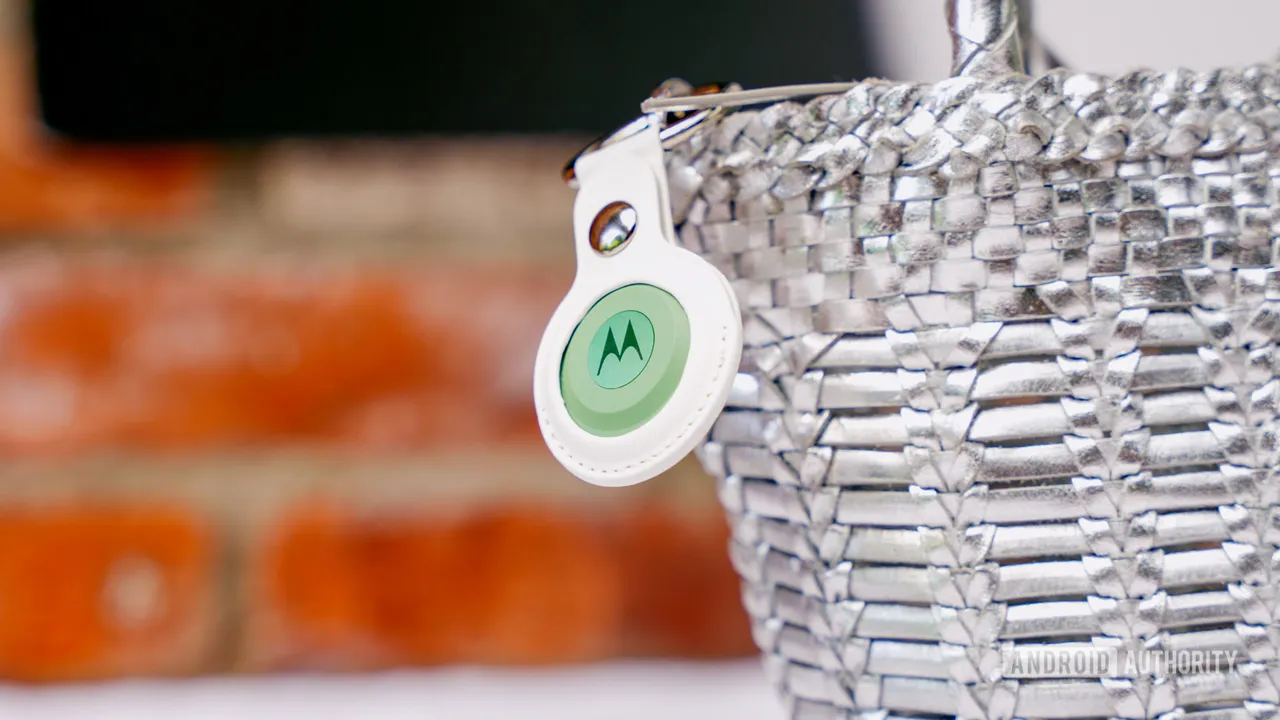
You can use Pixel Tag with an Android phone running Android 9 or later: basic tracking includes a map and a chime within Bluetooth range. Neither a Pixel phone nor UWB is required. Directional guidance needs compatible UWB support; Google's examples include Pixel 8 Pro and newer Pro models, plus Galaxy S21 Plus/Ultra and newer Plus/Ultra models.
Three levels of finding
Your phone's hardware and Android version determine which finding features you can use.
1. Map and sound: Android 9 or later meets the basic requirement. Away from the tag, you get its last reported location. Nearby, you can make it chime and follow the sound, even without phone Wi-Fi or cellular service.
2. Distance estimates: Channel Sounding needs a compatible phone with Android 16 or later, Bluetooth 6.0 or later, and Bluetooth enabled. It gives distance readouts from farther away, helping you narrow the search before close-range UWB arrows take over on supported phones.
Channel Sounding extends to compatible Android phones from other manufacturers, including Samsung. ZDNET's coverage names Galaxy S26 Plus, S26 Ultra, Z Fold 8 and Z Fold 8 Ultra as Bluetooth 6.0 Channel Sounding phones. They are candidates for Pixel Tag's distance feature, though that report did not test those pairings. Find Hub also supports Samsung phones.
3. Distance and direction: enable UWB for arrows. Google also names Motorola Edge and Razr devices, without specifying every supported model.
Before buying, check your exact model's Android version, Bluetooth specification and Find Hub UWB compatibility separately.
Google's Channel Sounding examples broadly name Pixel 9 and newer devices, with availability varying by model. That wording leaves unresolved how every listed handset meets the separate Bluetooth 6.0 requirement. A generation name therefore cannot settle whether you will get distance estimates.
The older Pixel Pro catch
Standard Pixel 6 through Pixel 11 phones and Pixel A-Series phones lack UWB hardware. Pixel 6 Pro and 7 Pro have it, but owners should not expect arrows: Google told Android Authority in October 2025 that UWB precision finding was enabled only from Pixel 8 Pro onward. Google gave no explanation for excluding the two older Pros. That restriction was confirmed for Moto Tag; the report did not test Pixel Tag with those phones.
Price the tag and its holder
Pixel Tag has been on sale in the US since 11 November. AndroidPure reports $29.99 for one tag at Google Store or Amazon; Android Authority lists a $99.99 four-pack. There is no built-in keyring hole, so keys need a case or mount. The Bellroy Lite Case Duo costs $24.99 for two silicone cases. One tag plus a Duo costs $54.98, with a spare case. A four-pack plus two Duos totals $149.97: about $37.49 per tag with a holder, before applicable tax or shipping.
AndroidPure lists the UK and US among eight launch markets, excluding Puerto Rico. UK buyers should check the local store's pound price and delivery estimate: the coverage gives neither a UK price nor a confirmed UK ordering or delivery date.
Set it up
1. Start with your phone unlocked on its home screen. Turn on Bluetooth and connect to the internet. Completely remove the tag's battery tab, then put it directly beside the phone, following Google's pairing instructions.
2. Tap Connect. Review and accept the policies and terms, then grant location access while using the app.
3. For offline finding, allow Nearby devices permission and set a PIN, pattern or password.
Find something nearby—or miles away
For keys at home, select the tag in Find Hub and play its sound. On a phone supporting UWB guidance, tap Find nearby beneath the tag's name. Reviewers encountered different ranges: Android Authority's phone connected at about 30–40 feet, while Tom's Guide maintained UWB tracking to about 82 feet.
Finding also works in reverse: double-press the tag's button to ring your phone. Pixel Tag offers left-behind alerts too, adding a warning when you leave something behind to its search tools, as covered by 9to5Google.
For belongings miles away, participating Find Hub devices detect nearby items over Bluetooth and securely report where they encountered them. Use that last known map location to reach the area, then switch to sound or supported nearby guidance.
Allow for an imperfect map pin. In Android Authority's downtown test, it appeared away from the hiding place, and Play sound initially failed because the reviewer was outside Bluetooth range. At a quiet wooded trailhead, few passing Android phones made network location less useful.
If pairing or Find nearby fails
If no pairing prompt appears, look in Settings > Connected devices, then try Find Hub > Add Device. Dismissing the prompt starts a five-minute wait; a second dismissal extends it to 24 hours. Toggle Bluetooth or restart the phone to clear the wait.
If pairing worked but Find nearby is missing, wait briefly or move closer to where the item was last seen. The control requires supported UWB precision finding, so successful pairing alone does not mean arrows will be available.
Sources
- Google Pixel Phone Help: Google Pixel Tag technical & device specifications ↗
- Google Android Help: Be ready to find a lost Android device ↗
- Google Pixel Phone Help: Learn about ultra-wideband availability on Pixel devices ↗
- Google Pixel Phone Help: Set up and connect your Google Pixel Tag ↗
- Google Pixel Phone Help: Find items and share Google Pixel Tags ↗
- Android Authority: I lost my keys twice to test the Pixel Tag: It aced downtown but struggled on a quiet trail ↗
- 9to5Google: Pixel Tag tidbits: Surprise NFC, Find Hub setup, & Bellroy keychain cases ↗
- Tom's Guide: I tested the Google Pixel Tag and it’s the most findable tracker for Android phones — plus it does something Apple AirTag can't ↗
- AndroidPure: Google Pixel Tag Goes on Sale at $29.99, but Only in Eight Countries ↗
- ZDNET via Yahoo Tech: Samsung’s new SmartTag 3 debuts with next-gen Bluetooth – and one big problem ↗
- Android Authority: Older Pixel phones have a major weakness when it comes to UWB tracking ↗