Godzilla Minus Zero is changing the scale of its return
The sequel promises a taller picture for much of its running time, but the IMAX name alone does not tell you which frame a cinema can show.
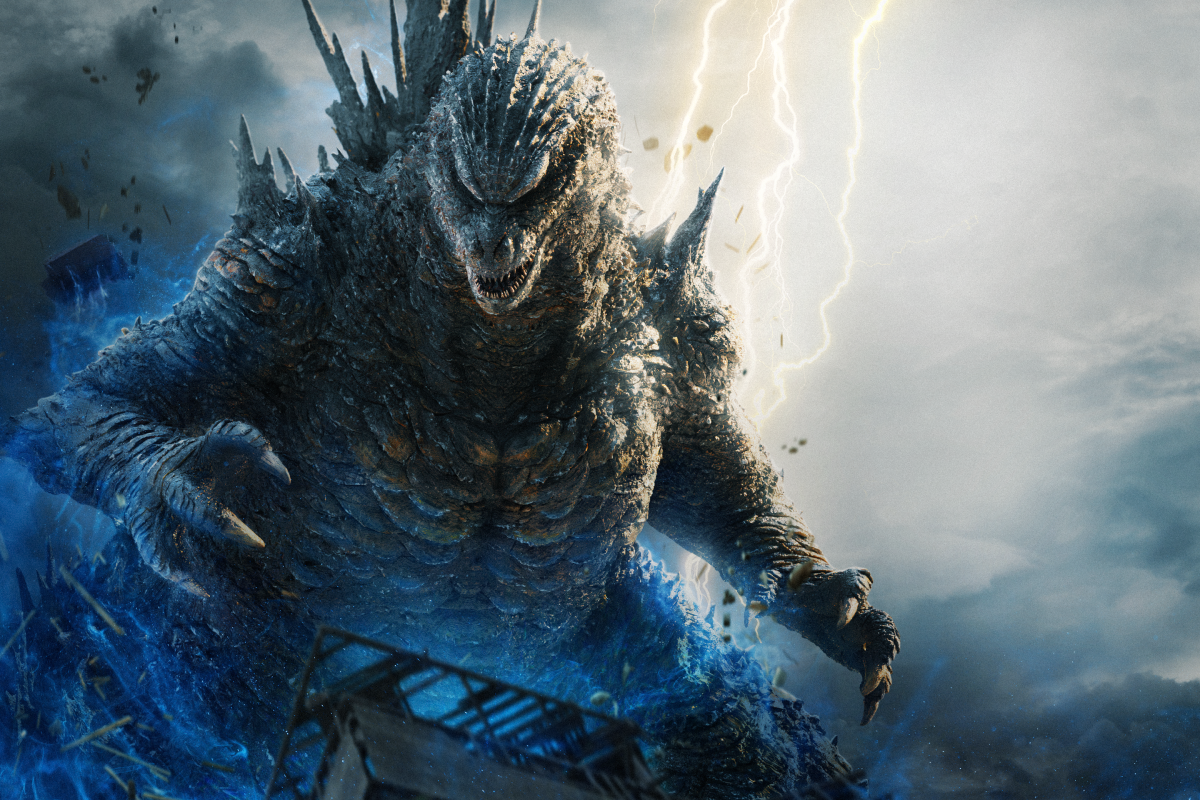
Godzilla Minus Zero is making its scale part of the ticket decision. IMAX says seventy-five minutes use its expanded picture format, giving the monster more vertical room than the conventional presentation. That is more than a statement about screen size: parts of the film have been prepared to fill a differently shaped frame.
The company says no earlier Japanese-language film had joined its Filmed For IMAX programme. It describes collaborating with Yamazaki on the production. That label connects the format to filmmaking, rather than simply announcing a booking on a large screen. The seventy-five-minute figure refers to material using the expanded frame; it is not the film’s total running time.
Which picture will you see?
Toho’s Japanese format guide distinguishes 1.90:1 and 1.43:1 IMAX presentations. These numbers describe width relative to height: 1.43:1 is the taller-shaped frame. The guide says the version depends on the venue’s equipment and presents both alongside an ordinary-screen comparison. Buying an IMAX ticket does not, on its own, establish that a particular auditorium can display the fullest 1.43:1 image.
The guide also links the format to a filmmaking decision. Takashi Yamazaki describes using long shots to sustain the feeling of being pursued by a monster, rather than quickly cutting away from that predicament. That is the director’s account of his intention. It explains why the production treats the frame and the duration of a shot as parts of the same experience.
A concrete example appears in IMAX Melbourne’s booking information. The venue specifies digital laser projection in 4K and says the seventy-five minutes of expanded footage fill its 1.43:1 screen. It lists Japanese dialogue with English subtitles and a running time of two hours and fifteen minutes. Those details describe that presentation, giving a prospective visitor more useful information than the format logo alone.
On that listed runtime, the expanded material occupies about 56 percent of the film: seventy-five minutes out of 135. The arithmetic helps explain the scale of the change without suggesting that the entire feature stays in one shape. Melbourne also lists November 5 as its release date, so its local calendar should not be substituted for North America’s opening.
A shorter wait across the Pacific
The North American release announcement scheduled November 6, three days after Japan’s November 3 date. Toho and GKIDS describe the same-week rollout as a first for a Japan-produced Godzilla film. That makes the interval between territories much narrower than an announcement that simply promises an international release at some later point. November 6 is the North American date, not a universal worldwide opening.
November 3 also has a specific connection to the series. The original Godzilla opened in Japan on that date in 1954, and Godzilla Minus One used it for its Japanese opening in 2023. The distributor calls the anniversary Godzilla Day. The new release plan therefore combines a familiar domestic milestone with a short announced wait for North American audiences.
The distribution relationship has changed too. Toho’s announcement places the release with GKIDS following Toho’s 2024 acquisition of that company, and after GKIDS handled the US theatrical return of Shin Godzilla in 2025. This sequel arrives through that established relationship rather than introducing a distributor unconnected to the franchise.
Behind the camera
Behind the format, the September trailer announcement keeps Yamazaki in three central roles: director, screenwriter and visual-effects lead. It describes IMAX-certified digital cameras and preparation of picture and sound for those screens. Filmed For IMAX is the production programme’s name; the stated camera choice is digital. It should not be read as a promise of a 70mm film print at the cinema.
The same announcement introduces Masami Nagasawa as Makoto Aoyama, a weather forecaster assigned to the Disaster Response Bureau, alongside new characters played by Jun Kunimura and Kou Maehara. It also confirms Kisuke Iida’s return as Akio Itagaki from Minus One. Those casting details put human participants back inside a campaign whose most visible selling point is the enormous creature.
Before choosing a seat, look for the auditorium’s stated ratio, projection format and language presentation on its own listing. Melbourne demonstrates how specific that information can be. A nearby 1.90:1 screening and a more distant 1.43:1 screening are different choices; the useful comparison starts with what those actual venues can show.
Sources
- IMAX: IMAX Godzilla Minus Zero ↗
- Toho Japanese format guide: Toho Godzilla Minus Zero format comparison ↗
- IMAX Melbourne: Godzilla Minus Zero at IMAX Melbourne ↗
- Toho and GKIDS release announcement: Godzilla Minus Zero Confirmed for North American Theatrical Release on November 6 ↗
- Toho and GKIDS trailer announcement: NEW THEATRICAL TRAILER AND POSTER REVEALED FOR GODZILLA MINUS ZERO ↗